<?xml version="1.0" encoding="utf-8"?><feed xmlns="http://www.w3.org/2005/Atom" ><generator uri="https://jekyllrb.com/" version="3.10.0">Jekyll</generator><link href="https://www.skhgroup.net/feed.xml" rel="self" type="application/atom+xml" /><link href="https://www.skhgroup.net/" rel="alternate" type="text/html" /><updated>2026-09-09T09:17:55+00:00</updated><id>https://www.skhgroup.net/feed.xml</id><title type="html">SKH Research Group</title><subtitle>Energy Storage Innovation Laboratory, Chulalongkorn University.</subtitle><author><name>Soorathep Kheawhom</name></author><entry><title type="html">Anion-enriched Na⁺ solvation enabled by FEC and trace NaF for stable cycling of tunnel-type Na₀.₄₄MnO₂ cathodes</title><link href="https://www.skhgroup.net/news/2026/09/02/anion-enriched-na-solvation-na044mno2/" rel="alternate" type="text/html" title="Anion-enriched Na⁺ solvation enabled by FEC and trace NaF for stable cycling of tunnel-type Na₀.₄₄MnO₂ cathodes" /><published>2026-09-02T00:00:00+00:00</published><updated>2026-09-02T00:00:00+00:00</updated><id>https://www.skhgroup.net/news/2026/09/02/anion-enriched-na-solvation-na044mno2</id><content type="html" xml:base="https://www.skhgroup.net/news/2026/09/02/anion-enriched-na-solvation-na044mno2/"><![CDATA[<p>Electrolyte additives for tunnel-type Na₀.₄₄MnO₂ are often selected empirically. Our new research paper in <em>Journal of Energy Storage</em> asks a more specific question: what do FEC and nominally added trace NaF actually change in Na⁺ solvation, transport, and interfacial behaviour?</p>

<h2 id="what-the-evidence-shows">What the evidence shows</h2>

<p>Raman spectroscopy and molecular-dynamics simulations identify <strong>FEC as the principal additive</strong>. It decreases Na⁺–EC coordination and, in the dual-additive electrolyte, promotes relatively greater ClO₄⁻ participation in the first solvation shell. Under the conditions examined, trace NaF has only a modest effect on homogeneous bulk solvation and is treated as a secondary co-additive.</p>

<p>The dual-additive formulation shows limited impedance growth, relatively balanced apparent Na⁺ transport during insertion and extraction, and largely reversible evolution of the tunnel framework by in situ synchrotron XRD.</p>

<p>Na‖NMO cells retain <strong>95.6%</strong> of their cycle-2 capacity after 150 cycles at 1C. This is essentially the same as the FEC-only formulation (<strong>95.9%</strong>), but higher than NaF-only (<strong>74.3%</strong>) and baseline (<strong>66.6%</strong>) electrolytes. An NMO‖hard-carbon full cell retains <strong>88.2%</strong> after 130 cycles at 1C and reaches an average Coulombic efficiency of <strong>99.84%</strong> over cycles 2–187.</p>

<p>The interpretation remains deliberately bounded: the dissolved state of nominally added NaF was not quantified, direct Na–F coordination was not established, and the measurements do not determine a unique molecular interphase mechanism. The strongest conclusion is therefore formulation-level—FEC drives the measurable solvation change, while trace NaF provides a modest complementary contribution.</p>

<h2 id="read-the-paper">Read the paper</h2>

<p>Weldegebrieal G. K., Kao-ian W., Gopalakrishnan M., Limphirat W., Buangam P., Zhang R., Liu W.-R., <strong>Kheawhom S.</strong> <em>Anion-enriched Na⁺ solvation enabled by FEC and trace NaF for stable cycling of tunnel-type Na₀.₄₄MnO₂ cathodes.</em> <strong>Journal of Energy Storage</strong> 181 (2026) 124418. <a href="https://doi.org/10.1016/j.est.2026.124418">DOI 10.1016/j.est.2026.124418</a></p>]]></content><author><name>Soorathep Kheawhom</name></author><category term="Paper" /><summary type="html"><![CDATA[New research paper in Journal of Energy Storage: FEC reshapes Na⁺ solvation and, with trace NaF as a secondary co-additive, supports stable cycling of tunnel-type Na₀.₄₄MnO₂ cathodes.]]></summary><media:thumbnail xmlns:media="http://search.yahoo.com/mrss/" url="https://www.skhgroup.net/img/og/anion-enriched-na-solvation-na044mno2.jpg" /><media:content medium="image" url="https://www.skhgroup.net/img/og/anion-enriched-na-solvation-na044mno2.jpg" xmlns:media="http://search.yahoo.com/mrss/" /></entry><entry><title type="html">Beyond metal recovery in lithium-ion battery recycling: order retention as a sustainability framework</title><link href="https://www.skhgroup.net/news/2026/09/02/beyond-metal-recovery-order-retention/" rel="alternate" type="text/html" title="Beyond metal recovery in lithium-ion battery recycling: order retention as a sustainability framework" /><published>2026-09-02T00:00:00+00:00</published><updated>2026-09-02T00:00:00+00:00</updated><id>https://www.skhgroup.net/news/2026/09/02/beyond-metal-recovery-order-retention</id><content type="html" xml:base="https://www.skhgroup.net/news/2026/09/02/beyond-metal-recovery-order-retention/"><![CDATA[<p>Lithium-ion battery recycling is becoming essential infrastructure for electrification, yet most comparisons of recycling routes still center on metal recovery, cost, and emissions. Our new article in <em>Green Chemistry</em> argues that this misses where much of a spent cell’s value actually resides: not only in its elemental composition, but in the multiscale structural order retained through service — crystal frameworks, particle morphology, conductive networks, and interphases.</p>

<p>The article reframes recycling around a single question — how much functional order survives the route — and builds three linked ideas on it:</p>

<ul>
  <li><strong>Order retention:</strong> the organizing metric. A recycling operation is either an <em>order filter</em> that preserves separability and manufacturable value, or an <em>entropy amplifier</em> that increases phase entanglement and downstream purification burden.</li>
  <li><strong>Reset-level taxonomy:</strong> recycling pathways sit on a continuum from shallow repair and cathode-to-cathode regeneration to deep chemical or elemental reconstruction, graded by the extent of irreversible structural and chemical reset.</li>
  <li><strong>Repair window:</strong> the conditions under which degradation stays bounded enough for direct regeneration to remain viable, before disorder accumulates and forces more destructive reprocessing.</li>
</ul>

<p>Framed this way, order retention becomes a green-chemistry design metric: shallow-reset routes that stay within the repair window curtail reagent, energy, water, and fluorinated-emission burdens, whereas deeper resets trade robustness for environmental cost.</p>

<h2 id="read-the-paper">Read the paper</h2>

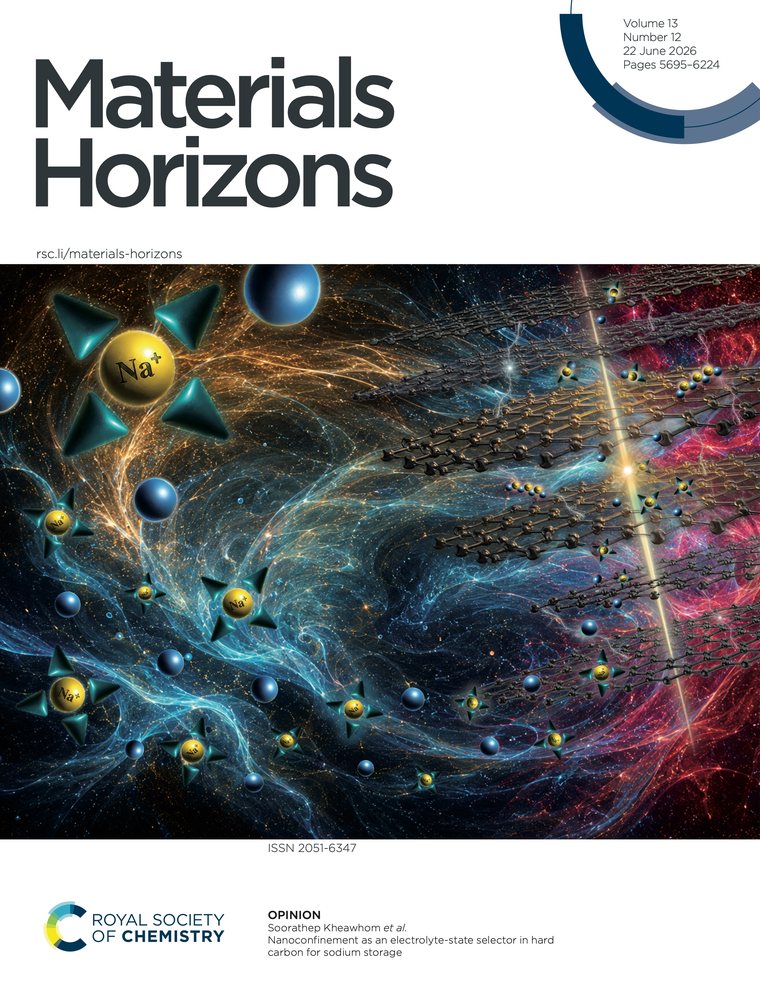
<p>Eeamtak S., Tamwattana O., Kasemchainan J., Pornprasertsuk R., Noerochim L., Watanabe T., Weng J., Mohamad A.A., Zhang Y., <strong>Kheawhom S.</strong> <em>Beyond Metal Recovery in Lithium-Ion Battery Recycling: Order Retention as a Sustainability Framework from Pack Disassembly to Interphase Chemistry.</em> <strong>Green Chemistry</strong> (2026), Advance Article. <a href="https://doi.org/10.1039/D6GC03171D">DOI 10.1039/D6GC03171D</a></p>]]></content><author><name>Soorathep Kheawhom</name></author><category term="Paper" /><summary type="html"><![CDATA[New article in Green Chemistry: an order-retention framework for lithium-ion battery recycling — value lies not only in recovered metals but in the multiscale structural order that survives a recycling route, formalized through a reset-level taxonomy and a repair window.]]></summary><media:thumbnail xmlns:media="http://search.yahoo.com/mrss/" url="https://www.skhgroup.net/img/og/beyond-metal-recovery-order-retention.jpg" /><media:content medium="image" url="https://www.skhgroup.net/img/og/beyond-metal-recovery-order-retention.jpg" xmlns:media="http://search.yahoo.com/mrss/" /></entry><entry><title type="html">Beyond the Lithium Template: a solvation-first framework for nanoscale sodium-ion interphases</title><link href="https://www.skhgroup.net/news/2026/08/25/beyond-lithium-template-solvation-first/" rel="alternate" type="text/html" title="Beyond the Lithium Template: a solvation-first framework for nanoscale sodium-ion interphases" /><published>2026-08-25T00:00:00+00:00</published><updated>2026-08-25T00:00:00+00:00</updated><id>https://www.skhgroup.net/news/2026/08/25/beyond-lithium-template-solvation-first</id><content type="html" xml:base="https://www.skhgroup.net/news/2026/08/25/beyond-lithium-template-solvation-first/"><![CDATA[<p>Sodium-ion batteries are moving from validation to deployment, and durable full-cell operation is now limited less by bulk-material discovery than by the chemistry, structure, and mechanics of the nanoscale electrode–electrolyte interphases. Our new article in <em>Nanoscale Horizons</em> argues that the solid (SEI) and cathode (CEI) electrolyte interphases in Na-ion cells cannot be read as scaled lithium analogs — they are nanoscale, mosaic, dynamically reorganizing layers set by a Na⁺ solvation sheath and double-layer environment that differ markedly from Li⁺.</p>

<p>The article reframes Na-ion interphase design around three linked ideas:</p>

<ul>
  <li><strong>Solvation-first:</strong> the primary Na⁺ solvation sheath — not the bulk electrolyte-stability window — selects first-layer chemistry at the nanoscale, through adsorption, desolvation, and absorption at the electrode surface.</li>
  <li><strong>Cross-talk:</strong> under lean electrolyte and practical negative-to-positive (N/P) ratios, the two interphases co-evolve through cross-talk rather than passivating independently.</li>
  <li><strong>Evidence tiers:</strong> credible mechanistic claims require an explicit evidence-tier hierarchy and a minimum reporting set, so that comparisons across laboratories mean something.</li>
</ul>

<p>The discussion is anchored in deployment-relevant markers — a representative hard-carbon full-cell initial coulombic efficiency near 91.4%, a reported optimal N/P of about 0.9 in a layered-oxide/hard-carbon pairing, and emerging 1.5 and 3.5 Ah cylindrical Na-ion formats — and closes with a co-design logic and benchmarking checklist for Na-ion full-cell interphase studies.</p>

<h2 id="read-the-paper">Read the paper</h2>

<p>Wisan T., Tangthuam P., Chang S.-H., Chou H.-H., Lin J.-Y., In I., <strong>Kheawhom S.</strong> <em>Beyond the Lithium Template: A Solvation-First Framework for Nanoscale Sodium-Ion Interphases, Cross-Talk, and Full-Cell Translation.</em> <strong>Nanoscale Horizons</strong> (2026), Advance Article, published online 25 August 2026. <a href="https://doi.org/10.1039/D6NH00245E">DOI 10.1039/D6NH00245E</a></p>]]></content><author><name>Soorathep Kheawhom</name></author><category term="Paper" /><summary type="html"><![CDATA[New article in Nanoscale Horizons: a solvation-first framework for sodium-ion SEI/CEI interphases — the Na+ solvation sheath selects first-layer chemistry, the two interphases co-evolve through cross-talk, and mechanistic claims need an explicit evidence-tier hierarchy.]]></summary><media:thumbnail xmlns:media="http://search.yahoo.com/mrss/" url="https://www.skhgroup.net/img/og/beyond-lithium-template-solvation-first.jpg" /><media:content medium="image" url="https://www.skhgroup.net/img/og/beyond-lithium-template-solvation-first.jpg" xmlns:media="http://search.yahoo.com/mrss/" /></entry><entry><title type="html">Durability-first engineering of carbon felt electrodes for aqueous redox flow batteries</title><link href="https://www.skhgroup.net/news/2026/08/21/durability-first-carbon-felt-flow-batteries/" rel="alternate" type="text/html" title="Durability-first engineering of carbon felt electrodes for aqueous redox flow batteries" /><published>2026-08-21T00:00:00+00:00</published><updated>2026-08-21T00:00:00+00:00</updated><id>https://www.skhgroup.net/news/2026/08/21/durability-first-carbon-felt-flow-batteries</id><content type="html" xml:base="https://www.skhgroup.net/news/2026/08/21/durability-first-carbon-felt-flow-batteries/"><![CDATA[<p>Carbon felt is central to many aqueous redox flow batteries, yet electrode studies often emphasize initial activity more than the stability of that activity. Our new article in <em>Journal of Power Sources</em> puts durability first.</p>

<p>The article connects three questions that should be answered together:</p>

<ul>
  <li><strong>Failure modes:</strong> What chemical, electrochemical, structural, or mechanical changes cause the electrode to lose performance?</li>
  <li><strong>Stress tests:</strong> Do the test conditions reproduce the loads and failure pathways relevant to practical operation?</li>
  <li><strong>Evidence standards:</strong> Are degradation claims supported by electrochemical diagnostics, physical characterization, clear baselines, and fully reported conditions?</li>
</ul>

<p>This framing shifts electrode evaluation away from a single beginning-of-life performance number. A treatment is useful only when its benefit survives operation, its degradation mechanism is identified, and the evidence is strong enough for comparison across laboratories.</p>

<h2 id="read-the-paper">Read the paper</h2>

<p>Sondit I., Tangthuam P., Chotigkrai N., An T. K., In I., Liu W.-R., Mohamad A. A., Tantaobharse V., <strong>Kheawhom S.</strong> <em>Durability-first engineering of carbon felt electrodes for aqueous redox flow batteries: Failure modes, stress tests, and evidence standards.</em> <strong>Journal of Power Sources</strong> 694 (2026) 241310. <a href="https://doi.org/10.1016/j.jpowsour.2026.241310">DOI 10.1016/j.jpowsour.2026.241310</a></p>

<p>Free full-text access until 10 October 2026: <a href="https://authors.elsevier.com/a/1neR%7E1M7w0mTFy">Elsevier Share Link</a></p>]]></content><author><name>Soorathep Kheawhom</name></author><category term="Paper" /><summary type="html"><![CDATA[New article in Journal of Power Sources: a durability-first framework connecting carbon-felt failure modes, meaningful stress tests, and stronger evidence standards for aqueous redox flow batteries.]]></summary><media:thumbnail xmlns:media="http://search.yahoo.com/mrss/" url="https://www.skhgroup.net/img/og/carbon-felt-durability-flow-batteries.jpg" /><media:content medium="image" url="https://www.skhgroup.net/img/og/carbon-felt-durability-flow-batteries.jpg" xmlns:media="http://search.yahoo.com/mrss/" /></entry><entry><title type="html">Becoming a Better Researcher</title><link href="https://www.skhgroup.net/news/2026/08/20/becoming-a-better-researcher/" rel="alternate" type="text/html" title="Becoming a Better Researcher" /><published>2026-08-20T00:00:00+00:00</published><updated>2026-08-20T00:00:00+00:00</updated><id>https://www.skhgroup.net/news/2026/08/20/becoming-a-better-researcher</id><content type="html" xml:base="https://www.skhgroup.net/news/2026/08/20/becoming-a-better-researcher/"><![CDATA[<p>Over the past several weeks, I have been reflecting on research through the eyes of ten remarkable thinkers.</p>

<p>Not because they were scientists.</p>

<p>Some were philosophers.</p>

<p>Some were teachers.</p>

<p>Some were psychologists.</p>

<p>Some lived more than two thousand years ago.</p>

<p>Yet each seemed to illuminate a different dimension of scientific life.</p>

<blockquote>
  <p><a href="/news/2026/07/20/the-academic-shadow/">Carl Jung</a> reminded us to ask, Who am I becoming?<br />
<a href="/news/2026/07/24/what-marcus-aurelius-might-say-to-a-researcher/">Marcus Aurelius</a> reminded us to distinguish between our duty and our outcomes.<br />
<a href="/news/2026/07/27/what-the-buddha-might-say-to-a-researcher/">The Buddha</a> reminded us to notice what we have become attached to.<br />
<a href="/news/2026/07/30/what-karl-popper-might-say-to-a-researcher/">Karl Popper</a> reminded us that good science advances by inviting the possibility that we are wrong.<br />
<a href="/news/2026/08/02/what-richard-feynman-might-say-to-a-researcher/">Richard Feynman</a> warned us that the easiest person to deceive is ourselves.<br />
<a href="/news/2026/08/05/what-thomas-kuhn-might-say-to-a-researcher/">Thomas Kuhn</a> challenged us to examine the assumptions hidden within our own way of thinking.<br />
<a href="/news/2026/08/08/what-socrates-might-say-to-a-researcher/">Socrates</a> reminded us that every new discovery reveals an even larger frontier of the unknown.<br />
<a href="/news/2026/08/11/what-viktor-frankl-might-say-to-a-researcher/">Viktor Frankl</a> asked us to remember why we chose this path in the first place.<br />
<a href="/news/2026/08/14/what-seneca-might-say-to-a-researcher/">Seneca</a> reminded us that a scientific career is ultimately measured in the moments to which we give our lives.<br />
And <a href="/news/2026/08/17/what-confucius-might-say-to-a-professor/">Confucius</a> reminded us that our greatest legacy may not be the papers we publish, but the people we help grow.</p>
</blockquote>

<p>At first glance, these ideas seem unrelated.</p>

<p>But together they tell a surprisingly coherent story.</p>

<p>A research career is not only an intellectual journey.</p>

<p>It is also a human one.</p>

<blockquote>
  <p>We learn how to think.<br />
We learn how to doubt.<br />
We learn how to let go.<br />
We learn how to question ourselves.<br />
We learn how to find meaning.<br />
We learn how to use our limited time wisely.<br />
And eventually, we learn that knowledge reaches its highest purpose when it is passed on to others.</p>
</blockquote>

<blockquote>
  <p>Publications matter.<br />
Citations matter.<br />
The H-index matters.<br />
Grants, awards, and professional recognition all matter.</p>
</blockquote>

<p>They shape careers, create opportunities, and help good ideas reach the scientific community.</p>

<p>But perhaps they answer only one question:</p>

<blockquote>
  <p>What have we achieved?</p>
</blockquote>

<p>The deeper questions remain.</p>

<blockquote>
  <p>What kind of person has this journey shaped us into?<br />
What habits of mind have we developed?<br />
What values will remain when today’s metrics have become tomorrow’s history?</p>
</blockquote>

<p>Perhaps becoming a better researcher has never been only about learning more science.</p>

<p>Perhaps it has always been about becoming a wiser human being.</p>

<p>If these reflections have resonated with you, then they have already achieved more than I hoped.</p>

<p>Thank you for reading, for thinking, and for walking this journey with me.</p>

<p>The conversation continues.</p>]]></content><author><name>Soorathep Kheawhom</name></author><category term="Perspective" /><summary type="html"><![CDATA[A closing synthesis of the series — ten thinkers, from Jung to Confucius, and one idea: becoming a better researcher has always been about becoming a wiser human being.]]></summary><media:thumbnail xmlns:media="http://search.yahoo.com/mrss/" url="https://www.skhgroup.net/img/og/becoming-a-better-researcher.jpg" /><media:content medium="image" url="https://www.skhgroup.net/img/og/becoming-a-better-researcher.jpg" xmlns:media="http://search.yahoo.com/mrss/" /></entry><entry><title type="html">Prof. Jeng-Yu Lin visits the SKH Research Group</title><link href="https://www.skhgroup.net/news/2026/08/19/jeng-yu-lin-visit/" rel="alternate" type="text/html" title="Prof. Jeng-Yu Lin visits the SKH Research Group" /><published>2026-08-19T00:00:00+00:00</published><updated>2026-08-19T00:00:00+00:00</updated><id>https://www.skhgroup.net/news/2026/08/19/jeng-yu-lin-visit</id><content type="html" xml:base="https://www.skhgroup.net/news/2026/08/19/jeng-yu-lin-visit/"><![CDATA[<p>We were pleased to welcome Prof. Jeng-Yu Lin from the Department of Chemical and Materials Engineering at Tunghai University, Taiwan, from <strong>17 to 19 August 2026</strong>.</p>

<p>Prof. Lin leads the Laboratory of Interfacial Electrochemistry. His research spans metal-ion batteries, supercapacitors, electrocatalysts, and electrochemical biosensors. The visit provided a welcome opportunity to exchange ideas around our shared interests in electrochemical energy storage and conversion and to strengthen academic links between our groups.</p>

<p><img src="/img/news/jeng-yu-lin-visit-2026.jpg" alt="Prof. Jeng-Yu Lin visiting the SKH Research Group in August 2026" /></p>]]></content><author><name>Soorathep Kheawhom</name></author><category term="People" /><summary type="html"><![CDATA[Prof. Jeng-Yu Lin from Tunghai University, Taiwan, visited the SKH Research Group from 17 to 19 August 2026.]]></summary><media:thumbnail xmlns:media="http://search.yahoo.com/mrss/" url="https://www.skhgroup.net/img/og/jeng-yu-lin-visit-2026.jpg" /><media:content medium="image" url="https://www.skhgroup.net/img/og/jeng-yu-lin-visit-2026.jpg" xmlns:media="http://search.yahoo.com/mrss/" /></entry><entry><title type="html">Coupled dielectric polarization and Fe redox charge storage in Ta₂O₅/bismuth ferrite heterostructures</title><link href="https://www.skhgroup.net/news/2026/08/18/coupled-dielectric-polarization-fe-redox-supercapacitors/" rel="alternate" type="text/html" title="Coupled dielectric polarization and Fe redox charge storage in Ta₂O₅/bismuth ferrite heterostructures" /><published>2026-08-18T00:00:00+00:00</published><updated>2026-08-18T00:00:00+00:00</updated><id>https://www.skhgroup.net/news/2026/08/18/coupled-dielectric-polarization-fe-redox-supercapacitors</id><content type="html" xml:base="https://www.skhgroup.net/news/2026/08/18/coupled-dielectric-polarization-fe-redox-supercapacitors/"><![CDATA[<p>Oxide heterostructures are often called “synergistic” when they outperform either parent material. Our new article in <em>Journal of Alloys and Compounds</em> asks a more demanding question: which phase stores charge, and which phase changes the interface?</p>

<p>The work couples bismuth ferrite with Ta₂O₅ and follows Fe and Ta under operating conditions. Diffraction, spectroscopy, and microscopy confirm direct contact between the two oxide phases, while impedance resolves Maxwell-Wagner interfacial polarization.</p>

<h2 id="what-the-measurements-show">What the measurements show</h2>

<p>After all seventeen operando Fe K-edge spectra are placed on a common normalization, no change in the bulk-averaged Fe oxidation state is resolved. The reversible component is bounded at less than <strong>1.4% of the charge stored in one cycle</strong> across the illuminated volume.</p>

<p>This does not exclude Fe redox confined to the particle surface. XPS resolves mixed Fe²⁺/Fe³⁺ character, so near-surface Fe redox remains consistent with the evidence, but operando XAS does not demonstrate it directly.</p>

<p>At the Ta L₃-edge, Ta remains at the Ta⁵⁺ end of the reference interval and its first Ta-O shell is unchanged. No Ta-centred redox transformation is therefore assigned; Ta₂O₅ is instead treated as an interfacial and polarization component.</p>

<blockquote>
  <p>The mechanism is bounded by measurement, not asserted from performance.</p>
</blockquote>

<h2 id="cti-interpretation-and-performance">CTI interpretation and performance</h2>

<ul>
  <li><strong>Coordination:</strong> operando XAS constrains the oxidation state and first-shell response of both cations.</li>
  <li><strong>Transport:</strong> greater surface area and accessible pore volume improve electrolyte access, while fast and slower storage processes coexist.</li>
  <li><strong>Interface:</strong> direct oxide-oxide contact, enhanced polarization, and lower apparent interfacial resistance couple near-surface redox capacity to charge accumulation.</li>
</ul>

<p>The composite delivers <strong>156 F g⁻¹ at 1 mV s⁻¹</strong>. A symmetric device reaches <strong>34 Wh kg⁻¹ at 558 W kg⁻¹</strong> and retains <strong>82%</strong> of its capacitance after <strong>10,000 cycles</strong>.</p>

<p>The interpretation remains deliberately limited: dielectric response and electrochemical kinetics are measured over different length scales, and bulk-averaged XAS cannot isolate a surface-confined reaction. Within those bounds, the work supports a practical principle—pair a redox-active perovskite with a high-permittivity insulator, then verify their division of labour spectroscopically rather than inferring it from performance.</p>

<h2 id="read-the-paper">Read the paper</h2>

<p>Selvaraj Y., Nangan S., Gopalakrishnan M., Venkattappan A., Eswaramoorthy N., Kao-ian W., Limphirat W., Yu S.-H., <strong>Kheawhom S.</strong> <em>Coupled dielectric polarization and Fe redox charge storage in Ta₂O₅/bismuth ferrite heterostructures for aqueous supercapacitors.</em> <strong>Journal of Alloys and Compounds</strong> (2026) 190516. <a href="https://doi.org/10.1016/j.jallcom.2026.190516">DOI 10.1016/j.jallcom.2026.190516</a></p>]]></content><author><name>Soorathep Kheawhom</name></author><category term="Paper" /><summary type="html"><![CDATA[New article in Journal of Alloys and Compounds: operando Fe and Ta XAS bounds the division of labour between redox capacity and interfacial polarization in an aqueous oxide-heterostructure supercapacitor.]]></summary><media:thumbnail xmlns:media="http://search.yahoo.com/mrss/" url="https://www.skhgroup.net/img/og/ta2o5-bismuth-ferrite-supercapacitor.jpg" /><media:content medium="image" url="https://www.skhgroup.net/img/og/ta2o5-bismuth-ferrite-supercapacitor.jpg" xmlns:media="http://search.yahoo.com/mrss/" /></entry><entry><title type="html">What Confucius Might Say to a Professor</title><link href="https://www.skhgroup.net/news/2026/08/17/what-confucius-might-say-to-a-professor/" rel="alternate" type="text/html" title="What Confucius Might Say to a Professor" /><published>2026-08-17T00:00:00+00:00</published><updated>2026-08-17T00:00:00+00:00</updated><id>https://www.skhgroup.net/news/2026/08/17/what-confucius-might-say-to-a-professor</id><content type="html" xml:base="https://www.skhgroup.net/news/2026/08/17/what-confucius-might-say-to-a-professor/"><![CDATA[<p>Confucius spent little time asking how people could become famous.</p>

<p>He spent far more time asking how they could become better.</p>

<p>Not only better scholars.</p>

<p>Better human beings.</p>

<p>Reading his teachings, I sometimes wonder what he might say to a professor.</p>

<p>Perhaps he would not ask about publications.</p>

<p>Or citations.</p>

<p>Or awards.</p>

<p>Perhaps he would ask a quieter question.</p>

<blockquote>
  <p>Who will grow because you were here?</p>
</blockquote>

<p>It is a different way of measuring an academic life.</p>

<p>Universities celebrate many achievements.</p>

<blockquote>
  <p>Papers published.<br />
Grants awarded.<br />
Students graduated.<br />
Rankings improved.</p>
</blockquote>

<p>These accomplishments matter.</p>

<p>They advance knowledge and strengthen institutions.</p>

<p>But they are only part of a professor’s contribution.</p>

<blockquote>
  <p>Every lecture shapes the way someone thinks.<br />
Every conversation encourages—or discourages—a young researcher.<br />
Every piece of thoughtful feedback helps someone take the next step.</p>
</blockquote>

<p>Many of these moments will never appear on a curriculum vitae.</p>

<p>Yet they may become our most enduring work.</p>

<p>Knowledge is not diminished by being shared.</p>

<p>It grows.</p>

<p>Perhaps this is why teaching has always been more than the transfer of information.</p>

<p>It is the cultivation of judgment.</p>

<blockquote>
  <p>Curiosity.<br />
Integrity.<br />
The confidence to ask difficult questions.<br />
And the humility to change one’s mind when the evidence demands it.</p>
</blockquote>

<p>A professor’s influence is rarely measured at the moment it is given.</p>

<p>Sometimes its true value becomes visible years later.</p>

<blockquote>
  <p>In a former student who mentors others with the same generosity.<br />
In a young researcher who learns to value truth over recognition.<br />
In a future discovery made possible because someone once took the time to teach patiently.</p>
</blockquote>

<p>Confucius understood that education is never only about knowledge.</p>

<p>It is about character.</p>

<p>The facts we teach today may eventually be revised.</p>

<p>The habits of mind we help cultivate may last a lifetime.</p>

<p>Perhaps this is the quiet privilege of being a professor.</p>

<p>We contribute not only to the literature.</p>

<p>We contribute to the people who will write the next chapters of that literature.</p>

<p>Every morning, a professor should ask one simple question:</p>

<blockquote>
  <p>Who will become a better scholar—and a better person—because of something I do today?</p>
</blockquote>

<p>Perhaps the most lasting measure of an academic career is not the papers we leave behind.</p>

<p>Perhaps it is the people who continue to learn, teach, and inspire long after we are gone.</p>]]></content><author><name>Soorathep Kheawhom</name></author><category term="Perspective" /><summary type="html"><![CDATA[A reflection on Confucius and the teaching life: why a professor's most enduring work may be the people who grow because of them, not the papers left behind.]]></summary><media:thumbnail xmlns:media="http://search.yahoo.com/mrss/" url="https://www.skhgroup.net/img/og/confucius-professor.jpg" /><media:content medium="image" url="https://www.skhgroup.net/img/og/confucius-professor.jpg" xmlns:media="http://search.yahoo.com/mrss/" /></entry><entry><title type="html">What Seneca Might Say to a Researcher</title><link href="https://www.skhgroup.net/news/2026/08/14/what-seneca-might-say-to-a-researcher/" rel="alternate" type="text/html" title="What Seneca Might Say to a Researcher" /><published>2026-08-14T00:00:00+00:00</published><updated>2026-08-14T00:00:00+00:00</updated><id>https://www.skhgroup.net/news/2026/08/14/what-seneca-might-say-to-a-researcher</id><content type="html" xml:base="https://www.skhgroup.net/news/2026/08/14/what-seneca-might-say-to-a-researcher/"><![CDATA[<p>Seneca wrote that it is not that we have a short time to live.</p>

<p>It is that we waste much of it.</p>

<p>Nearly two thousand years later, his words still feel uncomfortably familiar.</p>

<p>Especially in academia.</p>

<p>Researchers rarely complain about a lack of intelligence.</p>

<p>Or curiosity.</p>

<p>Or ideas.</p>

<p>We complain about a lack of time.</p>

<blockquote>
  <p>There is always another email.<br />
Another committee meeting.<br />
Another proposal.<br />
Another manuscript to review.<br />
Another administrative task that seems impossible to postpone.</p>
</blockquote>

<p>Days become weeks.</p>

<p>Weeks become years.</p>

<p>And one day we realize that we have spent much of our career responding to urgency rather than pursuing importance.</p>

<p>Seneca would probably ask a simple question.</p>

<blockquote>
  <p>What are you spending your life on?</p>
</blockquote>

<p>Not your calendar.</p>

<p>Your life.</p>

<p>The two are not always the same.</p>

<p>Busyness can easily become a substitute for progress.</p>

<p>A full schedule can create the comforting illusion that meaningful work is being done.</p>

<p>Yet activity and contribution are not synonymous.</p>

<p>The most important ideas rarely emerge between meetings.</p>

<p>They require uninterrupted time.</p>

<blockquote>
  <p>Quiet reflection.<br />
Careful reading.<br />
Patient thinking.</p>
</blockquote>

<p>The kind of work that often leaves nothing visible on today’s to-do list.</p>

<p>Science has always demanded more than productivity.</p>

<p>It demands attention.</p>

<blockquote>
  <p>Attention to unexpected observations.<br />
Attention to inconvenient results.<br />
Attention to questions that refuse simple answers.</p>
</blockquote>

<p>Perhaps the greatest resource in research is not funding.</p>

<p>Nor equipment.</p>

<p>Nor even talent.</p>

<p>It is sustained attention directed toward a worthwhile question.</p>

<p>Seneca reminds us that time is more than a resource to be managed.</p>

<p>It is the substance from which a life is made.</p>

<p>Every hour we spend is an hour we can never recover.</p>

<p>That realization is not meant to create anxiety.</p>

<p>It is meant to sharpen intention.</p>

<p>To ask not whether we are busy.</p>

<p>But whether we are becoming the kind of researcher we hoped to become.</p>

<p>Every morning, a researcher should ask one simple question:</p>

<blockquote>
  <p>If today were one page in the story of my scientific life, would it be worth keeping?</p>
</blockquote>

<p>Perhaps the measure of a scientific career is not how full our days have been.</p>

<p>Perhaps it is whether we gave our best time to the questions that mattered most.</p>]]></content><author><name>Soorathep Kheawhom</name></author><category term="Perspective" /><summary type="html"><![CDATA[A reflection on Seneca and the shortness of life: the difference between busyness and contribution, and why sustained attention to what matters is a researcher's greatest resource.]]></summary><media:thumbnail xmlns:media="http://search.yahoo.com/mrss/" url="https://www.skhgroup.net/img/og/seneca-researcher.jpg" /><media:content medium="image" url="https://www.skhgroup.net/img/og/seneca-researcher.jpg" xmlns:media="http://search.yahoo.com/mrss/" /></entry><entry><title type="html">Why Charge Is Not Enough</title><link href="https://www.skhgroup.net/research/why-charge-is-not-enough/" rel="alternate" type="text/html" title="Why Charge Is Not Enough" /><published>2026-08-11T02:00:00+00:00</published><updated>2026-08-11T02:00:00+00:00</updated><id>https://www.skhgroup.net/research/why-charge-is-not-enough</id><content type="html" xml:base="https://www.skhgroup.net/research/why-charge-is-not-enough/"><![CDATA[<h3 id="coordination-chemistry-gives-an-ion-its-electrochemical-identity">Coordination chemistry gives an ion its electrochemical identity</h3>

<p>A lithium ion carries a charge of +1. A sodium ion does too. Magnesium and zinc both carry +2. It is tempting to think that ionic charge and size should tell us how these ions behave in an electrolyte.</p>

<p>They do not.</p>

<p>Consider Mg²⁺ and Zn²⁺. Both are divalent, and their ionic sizes are comparable. Yet their electrochemical behavior can be remarkably different. Mg²⁺ strongly binds its surrounding ligands and often pays a substantial energetic and kinetic penalty when its coordination shell must reorganize near an electrode. Zn²⁺, in contrast, can access a wider range of coordination environments, with water, anions, and additives competing to define the species that actually reaches the interface.</p>

<p>The difference is not simply charge. It is coordination chemistry.</p>

<h2 id="an-ion-rarely-travels-alone">An ion rarely travels alone</h2>

<p>When we write an electrochemical reaction as</p>

<div class="equation" role="img" aria-label="M z plus plus z electrons yields M">
M<sup>z+</sup> + ze<sup>−</sup> → M
</div>

<p>the notation hides much of the chemistry.</p>

<p>In an electrolyte, the reacting species is rarely a bare M<sup>z+</sup>. It exists within a local coordination environment containing solvent molecules, anions, and sometimes specifically designed ligands or additives.</p>

<p>A more realistic starting point is therefore something like</p>

<div class="equation" role="img" aria-label="A metal ion coordinated by x solvent molecules and y anions">
M<sup>z+</sup>(solvent)<sub>x</sub>(anion)<sub>y</sub>
</div>

<p>and <em>x</em> and <em>y</em> are not merely structural details. They influence how the ion moves, how easily its coordination shell can reorganize, what reaches the electrode surface, and what ultimately reacts there.</p>

<h2 id="the-periodic-table-does-not-tell-the-whole-story">The periodic table does not tell the whole story</h2>

<p>Across common battery charge carriers, coordination behavior changes substantially.</p>

<p>Li⁺ is small and forms a compact solvation environment, commonly dominated by oxygen donors. Na⁺ is larger and generally supports a more flexible coordination shell with higher coordination numbers.</p>

<p>Moving to divalent ions changes the problem. Mg²⁺ combines small size with +2 charge, producing strong interactions with surrounding ligands and a relatively persistent first coordination shell. This can make coordination-shell reorganization and desolvation major kinetic barriers.</p>

<p>Zn²⁺ provides an instructive counterexample. It has the same formal charge as Mg²⁺, but its coordination landscape is considerably more diverse. Coordination numbers and geometries can change with solvent, anion, concentration, and additives. For Zn electrochemistry, controlling <em>which species exists</em> can therefore be as important as controlling how fast that species moves.</p>

<p>Al³⁺ takes the trend further. Its high charge density strongly polarizes coordinated molecules. In water, coordination is no longer merely a question of solvation: it can drive hydrolysis and change the chemical identity of the species itself.</p>

<p>These comparisons suggest that ionic charge and radius are useful starting descriptors, but not sufficient ones.</p>

<h2 id="structure-is-only-the-beginning">Structure is only the beginning</h2>

<p>Even coordination number does not tell the complete story.</p>

<p>Two ions may both have six coordinating oxygen atoms and still behave very differently. We also need to ask:</p>

<ul>
  <li>How strongly are the ligands bound?</li>
  <li>How rapidly do they exchange?</li>
  <li>How easily can the coordination geometry reorganize?</li>
  <li>How much does anion participation change with concentration?</li>
  <li>What happens to the coordination shell in an interfacial electric field?</li>
</ul>

<p>This distinction is important because</p>

<div class="equation">
coordination number ≠ coordination strength ≠ coordination dynamics
</div>

<p>The relevant quantity is therefore not a single coordination structure, but a <strong>coordination landscape</strong>: the accessible structures, their relative free energies, and the pathways connecting them.</p>

<h2 id="from-coordination-to-electrochemistry">From coordination to electrochemistry</h2>

<p>This leads to a causal sequence:</p>

<div class="causal-sequence" aria-label="Ion identity leads to coordination landscape, transport, interfacial reorganization, and electrochemical reaction">
  <span class="step">Ion identity</span><span class="arrow">→</span>
  <span class="step">Coordination landscape</span><span class="arrow">→</span>
  <span class="step">Transport</span><span class="arrow">→</span>
  <span class="step">Interfacial reorganization</span><span class="arrow">→</span>
  <span class="step">Electrochemical reaction</span>
</div>

<p>The first coordination shell determines what the ion carries with it through the electrolyte. Transport determines how that coordinated species reaches the interface. Near the electrode, the coordination environment must reorganize again before electron transfer, insertion, or metal deposition can occur.</p>

<p>The species observed in the bulk electrolyte is therefore not necessarily the species that reacts at the electrode.</p>

<p>That distinction matters.</p>

<p>An electrolyte can have high ionic conductivity while presenting an unfavorable coordination environment for interfacial charge transfer. Conversely, modifying an anion or adding a ligand may improve electrochemical reversibility even when bulk conductivity decreases.</p>

<p>The fastest electrolyte is not necessarily the best electrolyte.</p>

<h2 id="coordinationtransportinterface">Coordination–Transport–Interface</h2>

<p>This is why we place <strong>Coordination</strong> at the beginning of our Coordination–Transport–Interface (CTI) framework.</p>

<div class="causal-sequence" aria-label="Coordination leads to transport and then interface">
  <span class="step">Coordination</span><span class="arrow">→</span>
  <span class="step">Transport</span><span class="arrow">→</span>
  <span class="step">Interface</span>
</div>

<p>Coordination asks what chemical state the charge carrier actually occupies.</p>

<p>Transport asks how that state moves and evolves through the electrolyte.</p>

<p>Interface asks what remains of that coordination environment when the ion encounters an electrode and undergoes electrochemical transformation.</p>

<p>Li⁺, Na⁺, Mg²⁺, Zn²⁺, and Al³⁺ provide different answers to these questions. Comparing them may reveal something more general than the behavior of any individual battery chemistry.</p>

<p>It may reveal why an ion’s electrochemical identity is determined not only by what it <strong>is</strong>, but also by what it is <strong>coordinated to</strong>.</p>]]></content><author><name>Soorathep Kheawhom</name></author><category term="Research Note" /><summary type="html"><![CDATA[Mg²⁺ and Zn²⁺ carry the same formal charge, yet behave very differently. Coordination chemistry gives an ion its electrochemical identity.]]></summary></entry></feed>